October 21, 2012

Adventures in Oz—aka cuddling a Koala never gets old


 Maia and I have been back from Vancouver for over a month. We’ve got our routine down, and well the problem with routine is the days compress into one long stream of days that seem like every other day and you forget to pick out the unique moments and savour them.
Playing in the surf
Saskia--our neice and boat guest catches a wave
And I reckon it’s pretty unique here. You just need to stay tuned into the oddness that is Oz and try not to worry that your new Ozzie friends might be insulted by the fact you find it terribly funny that the purchase of a Halloween pumpkin came with a safety briefing (knives are sharp, pumpkins are hard, but the goal is to cut a spooky face into the pumpkin—here are some directions) or that Evan got a one hour talk (complete with quiz) on how to safely climb a step ladder.
Kings Beach
Palm Beach
We’ve pondered the excessive efforts to mandate safety (the population is stupid? Possibly drunk?) and the local’s impressive ability to miss the point (“Did you notice the new countdown timers on all the walk signals?” “Yup, no idea what they are for…”) But one place we do appreciate the safety measures is on the beaches. AU has an enviable surf lifesaving program—a program that grew after the bylaws the banned swimming on the beaches were lifted in 1902. Yup, swimming at the beach during daylight hours was once illegal in parts of Australia…
 

Surfers Paradise at sunset
The beaches today are great. We’ve been back up to the Sunshine Coast for surfing and fun at Kings Beach and down to the Gold Coast for a day at Palm Beach (you pass through Miami to get there). Like towns, each beach has its own feel—Kings Beach felt like something out of a 1960’s Beach Party movie, while Palm Beach was a little more rugged and wild feeling. 

October 7, 2012

Raft-up: Feeling the fear and doing it anyway


 I thought for a while about how to write this post. My impulse was to do a top ten fears and how I cope kind of story. It would be easy to write that way—less raw and exposing. I could say I’m fearful of storms but we practice good storm management skills and have sorted out how best to ride out bad weather on this boat. Or I’m fearful of breakdowns but we have repair equipment on board and know how to use it.
But my fear doesn’t work like that. In the moment when sails are ripping, reefs are looming, engines aren’t starting or Maia is crying I am clear-headed and pragmatic, and even though my mouth may be dry and my hands might shake, fear is not a problem.
Then I thought I could write this by telling you the details of a particularly difficult experience (Nearly hitting the reef in Vanuatu? Losing the rudder off the Marquesas? The weather bomb off La Cruz? Maia fearing she will never have friends again?) But realized that without immediacy the feelings fade and it simply becomes a story.

Instead I will admit I would like to be a fearless person.

I would love to embrace high winds and towering seas with gusto and awe rather than with shaking knees and white knuckles on the helm. I would love to look at a chart with a long course plotted out for somewhere marvelously foreign and feel nothing but wonder, rather than the more familiar wonder tinged (heavily) with anxiety. I would love to watch Maia as she takes on this world we’re sailing her through and know wholeheartedly that we’re doing the right thing, rather than having the brokenhearted moments of wondering just what she’s losing in this transaction.

Fear is one of the toughest things about cruising for me. I'm fearful of big seas, high winds and crowded seaways. I'm fearful of docking in adverse wind and anchoring in crowded bays. I'm afraid of stuff breaking and equipment failing. I’m afraid of slipping on deck in rough conditions, or of one of us being hurt, or lost overboard. I am afraid that when all is said and done we will regret our choice to cruise. And I worry I am the only sailor who lives this close to the edge of my comfort zone.

Some nights when I wake at 12 midnight and again at 6 am to take over watches I need to go through my mantra, “The night is dark, but I'm not in danger in this moment. The sounds are loud, but nothing is breaking in this moment. The wind is strong, but right now it's propelling us safely.” Some nights when I wake at 3 am worrying that Maia has no permanent base, and that, for children especially, bonding with new people just gets more difficult the more often you say goodbye I need to remind myself that this life is the best gift I know to give my daughter.  

This is a magical life. But there are trade offs. It’s not secure. Not for us. We gave up good jobs in a loving community for the hope we’d find work when we needed it and that we would create a floating village around us. We are aware that our safety is not guaranteed--not on shore, not at sea. We think but don’t know that Maia will blossom better out here.

I read book called Mimff: the story of a boy who was not afraid over and over when I was a child. It was based on an old fairytale about a boy who ran away from his home and family to find fear. I was intrigued, even then, by the idea of being fearless. Mimff traveled the world in search of ‘the fear’ but it wasn’t until he returned home, defeated, and discovered his mother had become very ill while he was gone that he felt afraid.

To me the moral of the story was that you really need to love and value something, or someone, to feel fearful for its security. So I hold that. And when I feel so very afraid, I know it’s because I love this life so very much.

Read more raft-up:
1 Dana svnorthfork.blogspot.com
2 Behan sv-totem.blogspot.com
3 Steph www.sailblogs.com/member/nornabiron
4 Stacey sv-bellavita.blogspot.com
5 Tammy ploddingINparadise.blogspot.com
6 Ean  morejoyeverywhere.com
7 Lynn sailcelebration.blogspot.com
8 Diane www.maiaaboard.blogspot.com
10 Jaye  lifeafloatarchives.blogspot.com
11 Verena pacificsailors.com
12 Toast blog.toastfloats.com

October 1, 2012

What Does a Sailor Need?


Okay—so the title is a bit of a misnomer, it should read what does an Oz based sailor need from Canada? But that seemed wordy. Really we lack for nothing here in Australia. A bit of searching through shops and on the internet and we can find everything we need for the boat. After all, many world-cruisers take off from these shores.

The problem is that often when you find the boat bit you need to pay for it with a wheel barrow of cash. Often the difference in price is just enough to give you a little wallet strain and you suck it up. But in the case of some stuff; weird things like zinc-anodes—the little (heavy!) chunks of sacrificial metal that keep a boat’s underwater metal bits from corroding away, and sailing blocks—the pulleys that allow ropes to run more freely on a boat the price is enough to cause shock.

Happily both are items that are much cheaper in Canada, but it turns out they are also items that when stowed in your carry-on they cause your hand luggage to be searched extensively by airport security. The reason they were in my carry-on is our checked bags were well over weight limit. And no—I hadn’t stocked up on cheap shoes (though I sort of wanted to), I was bringing back paper.

Our list of stuff to bring back was mainly focused on charts (well, we also had replacement parts for the pressure cooker, sanding disks, seals for the canning jars and a few books). But aside from those random items I brought back 75 lbs of paper charts—which actually only added up to charts for a portion of SE Asia and (unexpectedly) a region of the North Sea.

You might wonder why I would pay overweight fees for navigation materials that thanks to chart plotters have essentially gone the way of the dodo, or the sextant. Well, we tend to be late adopters. On our first cruise we only embraced that new-fangled GPS thing when it proved that our sextant using skills were going to take more than one rushed afternoon to perfect. The GPS, it turns out, was a keeper.

But technology often has this way of removing you from the activity you set out to engage in. Chart plotters are easy to use, convenient to have, save money, free up space and save weight (no need for 75 lbs of charts every time you visit a new region) -- but they also take away one more job on a sailboat.

We sail for a combination of the pure joy of it (setting the sails, handling the wheel, choosing a course...) and to get somewhere. And one of the aspects that makes sailing feel like sailing is the navigation. When you navigate with paper charts you're a lot more involved: keeping an eye on landmarks, plotting fixes, comparing what you see against where you are. With a chart plotter I find it easy to be lulled into navigation as video game. I watch my little boat as it bleeps along its onscreen course and completely miss the real landscape.

There’s a danger to navigating on screen. Boats have been known to run aground (to some very tragic outcomes) thanks to human vs chart plotter errors. With electronic navigation there is no necessity to keep a visual track of where you are going the way there is in paper navigating. And when you take human eyeballs out of the equation and stop trying to locate stars, lights, or other landmarks you can make mistakes. 

Tragedy is a rare outcome of electronic navigation though, mostly the drawbacks are the various risks of failure—what’s the back-up plan if your electricity fails and the screen goes blank? And really as a navigation aid (in addition to paper charts) chart plotters can really improve safety aboard.

So I lugged home 85 lbs of charts, fantasizing all the way about ditching them: maybe we should just have two chart plotters. Or maybe a chart plotter, a tablet and e-charts on the computer?

September 23, 2012

Living the Dream--Whales on Moreton Bay


Spring has sprung in Brissie
 We’re really loving life in Brissie—we’re making nice friends, the weather is fantastic, the location is excellent the only real drawback is that while we know creatures live in the murky fast swirling river, mostly they’re bull sharks.

I’m missing blue water. I miss getting up in the morning looking over the side and deciding the only sensible thing to do is jump in for a swim. I miss seeing the graduated shades of blue the very same way my eyes longed for the cool comfort of green when we spent a year in the desert.  Mostly though I miss the creatures; the familiar fish that gather in the shade of our hulls; or the charming short-term residents (a sea lion in Baja that spent a week with us and liked it when Maia blew bubbles on her tummy, the dugong in Vanuatu that were sent to us by magic); predictable visitors (the 8am whale, or afternoon dolphins); and the surprises (giant manta rays, curious reef sharks, shy turtles, a mama humpback and her calf…)

In Brisbane, underwater life has been replaced with cockatoos that play in our rigging, flying foxes that fill the sky at night and kookaburras with hyena laughs that make you join in with a giggle. But I still miss that blue water.
heading down the river
 We should sail the 11 miles down the river to the sea more often—but there always seems to be some fun social event holding us here, or a project that needs our attention. But sometimes we get lucky and social events, projects and seeing the ocean mean the same thing.

We set off down the river on a boat much bigger than ours. Evan had overseen its refit and the fact the engine stopped twice meant it was still going through a few teething pains. No one seemed to care though, and as we approached the north end of Moreton Bay we started to see whales.


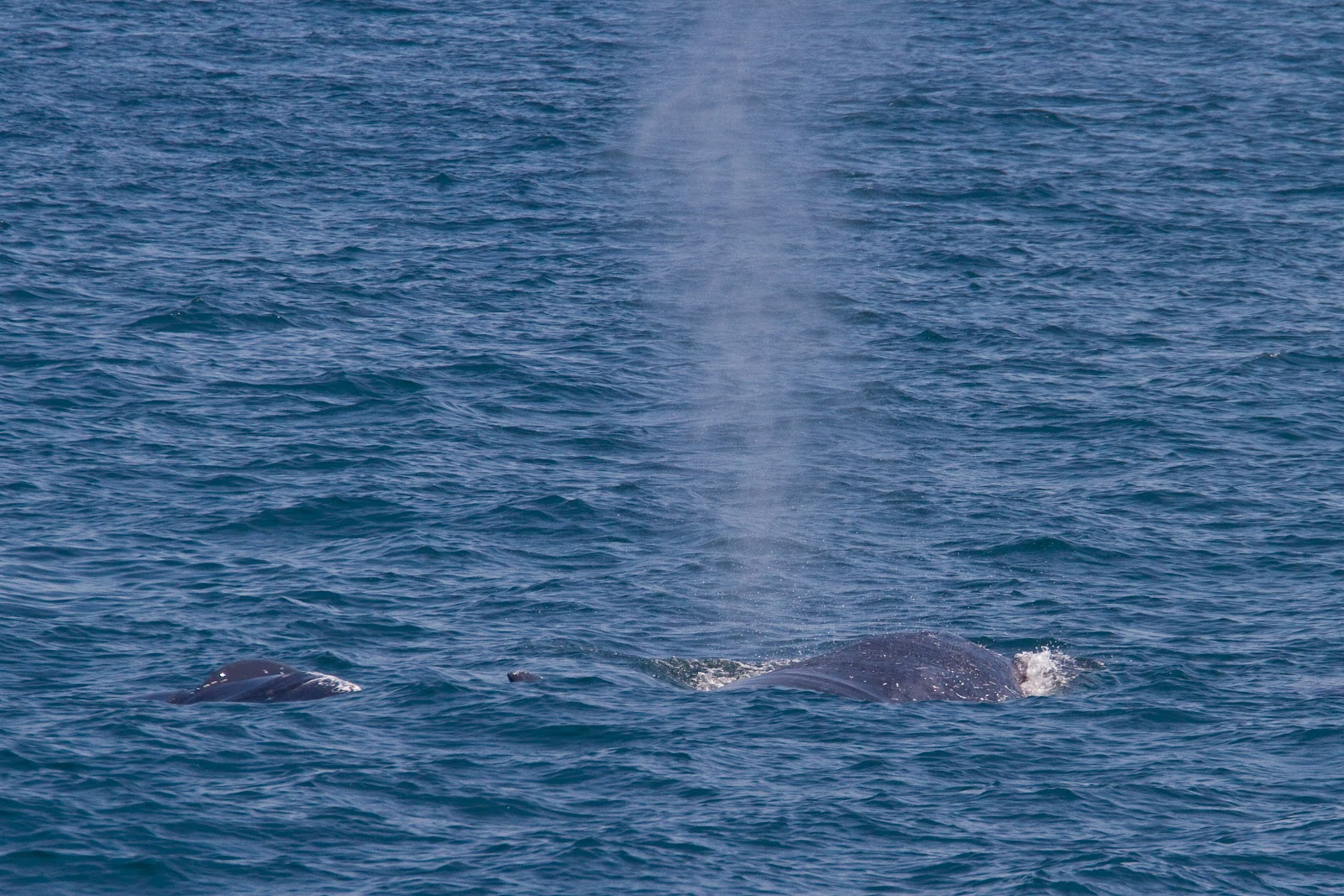
The southern humpbacks migrate 6000km from their feeding grounds in Antarctica to the lagoons in the Great Barrier Reef to mate and give birth. On the return journey, some stop in Moreton Bay for a time. We saw mamas and babies frolicking in the warm clear water. Some of the people onboard had never seen whales before and we felt a little greedy as we tallied not simply the number of times we’d seen whales on our trip so far (this turned out to be far more than we can count) but the number of whale species we’ve seen in the wild (nine for Ev and Maia, ten for me thanks to the Belugas I saw in the St Lawrence).
The day on the bay ended too soon and we were home to our boat by sunset. Maia and I went to the shops to pick up dinner and she told the clerk about our day. “That’s my dream,” the girl told us, “to see a whale in the wild.” As we walked back to the boat, and the kookaburras laughed, Maia commented what a funny feeling it is to get to live another person’s dream, “I’ll have to remember to stay grateful.” She told me.

September 7, 2012

Raft-up: Boat Swag and Trade Items


I made the mistake of looking at Verena’s post raft-up post on this months topic: 'what do we have for boat swag and what do we trade with the locals' and come away with a, “hey I was going to say that” kind of thought. 
We also only have boat cards (though we opted for the free vista print option) and somehow we missed details on them—like our blog address. Beyond that we carry a few Canada-oriented gifts as boat swag: an ever changing assortment of t-shirts, ball caps, pens and pencils as well as a stack of my mum’s art cards (you end up with a lot of people to say thank-you to in this lifestyle). And we've also  struggled to find the perfect (doesn’t take up too much space or weigh too much) trade item.

We were given a lot of bananas
We trade a moderate amount. Actually I would say more than trading we do a lot of reciprocal gift giving. A local will show up with some sort of gift (typically fish or fruit) and after hanging out for a while chatting—we frequently invite gift givers up to the nets for refreshments—I’ll dig out some sort of gift (school supplies if they have kids, or fishing supplies, galley overstocks or a baseball cap.)  
Occasionally at this point we might make a trade deal for a future item: more fish, a specific type of fruit or vegetable, or some sort of handy-craft and the guest we have aboard will mention a specific need: batteries, rice, rope… Usually though it’s less formal than that and the next day more gifts show up and we again reciprocate.

If you happen to read cruising sites you will see there is a lot of debate as to what makes up the right trade item. Some people swear by alcohol and Playboys (though personally I’d be mortified to offer skin mags, and the combo strikes me as idiotic and verging on dangerous considering that some of the places we’ve travelled aren’t really Mecca for women’s rights…). The list of the ‘right’ trade items is longer than the list of what we typically trade for.

Our focus has been twofold: We stock up on things that are affordable to us but perhaps out of reach for the people we meet. And we save our castoffs if they still have life in them. All of this doesn’t amount to much—we have a moderate size  ‘trade bin’ that at various times has been stocked with school notebooks (after school starts they’re cheap), pencils and pens, paint, crayons and beach balls for kids. I’ve also picked up wind-up flashlights when they’ve been on sale, multitools we’ve found at garage sales, fish hooks and fishing line.

We also save old clothes (particularly Maia’s or mine—Ev’s are pretty nasty by the time he’s done), cast-off sheets, or fabric I never got around to using (both were hugely appreciated), short lengths of rope, pots or pans we’ve upgraded from, plastic yogurt containers (these were seriously appreciated in isolated villages). Basically—we keep stuff we’d hate to throw away. Because it really is true—someone somewhere can use them.
I have to say the gift-giving/trading interactions have been some of the best we've had with the people we've met. I highlight gift-giving because that's really been the spirit we do it in. We're not after getting the best deal--because honestly what does it matter to me if I get two fish, four tomatoes and a yam for my fish hooks, baseball cap and used sunglasses, or two fish, four tomatoes and two yams?

We're not out sailing to get the best deal--we already got it. And my feeling is all these places leave us feeling a little richer so why shouldn't our presence do the same for the people we encounter?
When this is the view from your boat and your visitor arrived by hand carved canoe--how good a trade do you really need to make?
More Raft-up
Date     Name    Blog
1           Dana     svnorthfork.blogspot.com
2          Jane      morejoyeverywhere.com
3         Behan      http://sv-totem.blogspot.com
4         Lynn       www.sailcelebration.blogspot.com
5         Toast      blog.toastfloats.com
6         Verena    pacificsailors.com
7         Diane    me:)

September 4, 2012

Tools of the Trade

I had one summer stint as an interior house painter.  I lasted about a month - the job was done on a piecework basis and if you couldn't beat the boss's low ball estimate, you couldn't make money.  It was the start of the summer painting season, and to get jobs, the boss gave really LOW quotes to homeowners.  I didn't make much money but I did learn a lot about painting quickly.

But this post isn't really about painting - it's mostly about the prep work.  Boats are much harder to paint than a house.  If you're painting the inside there's wood trim everywhere or very tight spots and odd angles or funny bits of hardware you have to mask off.  You (or people who visit your boat) are also likely to be a lot closer to the painted surface than the inside of a house.  And you probably are using gloss paint or varnish because it's more scrubbable. So flaws are more readily apparent.

The truism in painting is that prep work is 90% of the job. It doesn't quite take 90% of the time but tge importance is quite true.  So here a few thoughts from somebody who has painted more than his fair share of this boat and our last one.  Neither boat was a production boat with a molded fiberglass liner.  So interior bulkheads and cabinetry were mostly varnished wood (last boat) or painted (this boat).

A lot of the prep work is cleaning the surface before the paint is applied.  I often start with spraying the surfaces with an all purpose cleaner and wipe it down well with lots of rags.  I'm trying to get off dirt, mold, kitchen grease, and dust.  Then I sand to roughen up the surface so the paint will stick better.


We have 3 sanders and an angle grinder on Ceilydh and they all serve different purposes.

#1:  Old Faithful
A 5" Porter Cable random orbital sander. This is a good all purpose sander, especially if you hook it up to mini shop vac. Hooking it up to a vacuum allows almost dust-free interior sanding.  If you're living aboard and moving all your possesions out of the way would be a chore, then this is a great option.  If you only have 1 sander aboard, get this style.  Note that Porter Cable used to use a 5 hole velcro sanding disc.  Everybody else seems to have standardized on 8 hole. So get an 8 hole sander so you can replace the sanding discs in remoter location. Such as Australia  I've replaced the velcro pad a few times with aftermarket stick on ones and at least 1 set of the external orbit bearings. It just keeps running.

Note:  The vacuum draws 6.2A @ 120V and the sander about 3 A = 9.2A @ 120V or about 100 Amps DC for the the inverter.  I can run this combination in direct sunlight (solar panels putting in 16A) for a few hours before the battery voltage starts dropping.  I'm not running it continuously.  I'm stopping to change sandpaper, move the vacuum, etc.  The limiting factor is the inverter; it has a 1000 W continuous rating and it will alarm and stop working after a few hours. You have to let it cool down for 20 minutes before it keeps going.


#2:  The Beast
2nd from the left.  If you are building a boat, then you must buy this tool or something a lot like it.  A 6" Porter Cable random orbital sander makes short work of lots of fairing or rough objects. It's variable speed for when you're trying to be delicate but mostly it runs at full throttle. However I don't dare use it inside. It throws dust everywhere. It uses sticky discs which are much cheaper than velcro discs, especially if you buy rolls of 100 from the autobody supply shop.


#3: The Present
The red one with triangular pad.  This was a present (I can't recall if it was birthday or Christmas) When we were living in Annapolis on our last boat Di did a bit of ahem casual work, varnishing on other boats. Varnishing always means sanding, and this little Milwaukee detail sander is great on trim and in tight corners. It's about 90% as good a sander as the Fein multitool without the cost or versatility of the Fein. It's a 'nice to have' sander but unless you own a Taiwanese made teak forest interior it may not be required. Unlike the Fein you can also hook it up to a vacuum.

#4 Angle Grinder
The Skil one on the far right.  It's got to be 20 years old now. Not really a sander except in the crudest sense.  But when fitted with 24 grit wheels it can take down a bunch of fiberglass in a hurry.  If fitted with 50 grit and a delicate touch it is surprisingly good at smoothing down lumps of resin or blobs of glass.  Do not use indoors unless you tent the area affected and allow 2 hours or more for dust removal.


Power tools - final thoughts
The tool companies are now making special "big box store edition tools".  They look like the regular models but are often cheaper (both in terms of price and what is on the inside).  Check the model numbers on the internet and maybe buy from specialist online tool stores.  I tend to buy 'contractor grade tools'.  They last forever if treated well.  I won't buy Ryobi or Black and Decker or Sears. Don't buy 1/4 sheet sanders.  They do a good job of vibrating your hand but are seldom useful for decent production.  Buy corded tools, not cordless.  While a bit more inconvenient to find an extension cord I'm never stopped in a project with a flat battery. The batteries do die and are costly over the life of the tool. Just make sure you have an extension cord that will reach the top of the mast so you can drill that hole up there. You're going to need a long extension cord in whatever boatyard you end up in someday anyway.


Masking Tape - One boatyard quote that I love: "You can tell the professionals from the amateurs by the amount of blue tape they use".  It's quite true. Watch boatyard workers working on somebody else's boat sometimes and note the extent they will protect surfaces from paint, dust etc. with large amounts of cardboard, plastic and masking tape. If you are doing a multi day painting job use the 7 day tapes (usually blue or green) but check the label to see if they really promise good multi day performance.  Some are just blue! This is really important outside in tropical sun.  Beige crepe paper is good for a day or two but shouldn't stay on much longer unless you want to become intimately familiar with Goo Gone adhesive remover. I tried a blue mylar tape for this job and some regular blue paper tape to compare.

The thin mylar tape probably is going to give a nice clean edge - but it doesn't stretch around corners and is much harder to tear cleanly. You need to use your teeth. I'd use it on a nice staight waterline but probably not again inside. I also found out today that the primer doesn't stick to it and breaks off in nice flakes into your nice topcoat. Boo.


Protective Gear - when I was building the boat I was often blowing my nose after a weekends work and finding black or white snot in the tissue (carbon or epoxy bog). I became much more diligent about wearing my mask after that.  Get a good protective half mask like the picture. Wear it all the time when sanding or using any 2 part paints. Change the carbon filters every 6 months or if you can smell solvents when wearing it.

If you're sanding inside with a shop vac, use ear muffs or ear plugs.  They're quite loud

If you are a contact lens wearer like me, take out the contacts during sanding, and probably during painting too. Dust gets into your eyes and can float between the contact and your eye, really irritating it. I seldom wear goggles while sanding unless it's overhead or in a tight space and I know I'll get stuff in my eyes.  A lifetime of contact lens wear has made my eyes pretty impervious to minor irritations but you might not be so lucky so also consider some eye protection.


Rags - after all that sanding you have to remove the dust.  I try to be methodical about folding my rags into half, then quarters and then dampening them with water. If I pay attention I have 8 surfaces that I can use by flipping over, unfolding, and then refolding my rags. Change rags frequently. If you are short on rags, rinse them and re-use but use a 2nd clean rag for the final rinse.  If you have a choice, use dark coloured rags for light surfaces (like white or light grey primer) and white rags for dark surfaces (like dark topsides paint).  The contrasting colour makes it easy to see if you have wiped down a surface enough. One pass is seldom enough by the way.  I often carry a rag in my pocket if the painting is in a particulary important place and wipe it down dry immediately before the paint is applied.

Questions or comments as always are welcome.

- Evan

September 2, 2012

Cruising Home


Maia diving in
Maia dove into the frigid BC waters for a swim. Okay—so not really frigid; the water was an incoming tide, sun-warmed, probably 21C, maybe more. It didn’t give my feet an ice cream headache until I waded in past my knees.
Maia wanted me to swim too, but I’m not ten. And I’ve been acclimatized to the warm, vibrant blue waters of more tropical places. It didn’t stop me from recalling the shock of the plunge though, and the near instant adjustment as the caress of the buoyant water takes over from its initial chilling grip.
Being back makes me savour all the little things that Maia only had faint memories of but that were staples of my childhood; wading through thorny brambles to pick blackberries, digging through sand for clams, munching on sea asparagus as we walk the beach, harvesting fruit from trees, eating smoked salmon as the sun dips behind the mountains, knowing to my very core that this is my home…
Living a nomadic life always has a push/pull hold on me. There is so much I love about encountering new people, places and ideas but there is so much I miss about being rooted to a place. I profoundly miss that deeper awareness that comes with simply knowing, without understanding how you know, the names of every plant and where to look for the juiciest berries. I miss the deep connection to a community that leaves you aware of your neighbours and noticing if they need you.
digging for clams
 Maia washed off the purple blackberry stains in the ocean and emerged with the faint blue lips I know signal the end of a swim. She started digging in the sand and came up with a clam, then a dozen more. She’s been fully immersed in more than just water this trip; she’s been rediscovering the rhythms of family as her grandparents take her by the hand and teach her about our life here.
Mini golf with Grandpa Donn and Linda--an island passion (there are dozens of courses)
 Her Grandpa Donn teaching her the lessons of love and perseverance as he passes along gifts from her late Grandma Ann and shares his new happiness. Her Grandma Marg teaching her reverence for the old things she received, showing her how to polish old silver and appreciate its beauty. Her Grandpa Frank teaching her stewardship as they head out to restore salmon streams and care for the gardens.
Salmon stream restoration with her grandpa
These are the things we can’t always find and feel by being nomadic. We move too quickly. We are too much on the edges of the lives we encounter. We are not immersed. For better and worse we are visitors. My fear was Maia would be a visitor here too. That by only coming back occasionally, by not following the seasons and watching the changes as they happen, she would never feel a deep connection to the island that’s been my family’s home for generations.
But as she pulled up the clams and marvelled at the fact that she knew they were there, without really knowing how, I decided that for now we’re okay.
 She dove in; fully and with her whole heart.