November 18, 2012

Our 1st Ozziversary—things we love about Brisbane


We just celebrated our first Ozziversary on November 15. It was one of those milestones that snuck up on us—it seemed so recently we were immersed in trying to find the hardware store, grocery store, nearest good beach then suddenly I had the answer when strangers asked for directions or tourists asked for ideas about what to do. I know where Albert Street is, I can suggest good ways to spend an afternoon. I actually know what people are saying to me now…

Time flew past while we were caught up with our own routine, but as this season’s boats were wrapping up their Pacific crossings, new cruisers were heading off to Mexico and those ahead of us are exploring PNG, SE Asia or closing in on Africa, and it became impossible not to acknowledge the fact we’ve been here for a whole year.
the jacaranda tree near our boat--my new favourite tree
When you’re used to moving all the time (Maia spent the past five Halloweens in five different countries) staying in one place for an entire a year of seasons feels a bit strange. The surprise of the jacarandas blooming has given way to the expectation the flying foxes will return, and the mild sunny spring days are starting to grow humid, with thunder and lightening storms arriving to cool them off—a sure sign our tropical summer is just around the corner.

Being in a place for a year though also means we’ve developed a bit of a list: things that are good, things that are bad and things that just confuse the heck out of us. But because this is a celebratory post I’ll stick with the good. So in no particular order—here are some of the things we love about Oz:
it's easy to gather friends when parks come with BBQs and shelters
BBQ’s—Almost every park has them. Free electric or wood BBQ’s where you can sizzle your sausages while enjoying lunch at a nearby picnic table. Early on we learned the etiquette. If the barbie is busy queue up your meat and enjoy a bevvie while you while away the arvo waiting your turn.

Bubblers—Forgot your water bottle but refuse to buy bottled water? No worries mate. There are bubblers (water fountains) almost on every corner (and even on a few hiking trails).
City Ferries—We love the public transit system here and the free city hopper ferries are a great bonus. They are slow, and don’t run that frequently but they work for some trips and they are fantastic entertainment.

can you spot the koala?

not a crime scene--this is known as a bloodwood tree, I think...
Flora and Fauna—This is a country full of fantastical creatures and weird plants straight out of a nursery rhyme. The other day a wild kangaroo came up to us in the park mooching for food. A kangaroo! And last weekend we saw our first wild koalas. Seriously, that never gets old.

this is a chook, not a chicken. honest.
 The Lingo—So I’m pretty sure we understand most of what people say to us now. Occasionally I’m still stumped—but now when someone tells me to rug up or suggests we wag off I don’t assume the worst.

Australia Day--just one of the 365 things people in Brisbane appear to celebrate...
Fun, fun, fun—There’s a celebration for that. Could be our city, could be Oz, but there is a festival on right now. And there was one last weekend. And there will be one next weekend. I'll reckon that whenever you read this there will be a festival on.

Public art, parks and spaces—Brisbane prides itself on the amount of public art that’s around the city—in fact it has policies which require new buildings to provide a certain amount of public art or public space. The city also has heaps of parks, pathways and trails—this means we don’t need to leave the city even to find new places to explore. And the playgrounds... Oh, to be a kid.

Farmers Markets—I love markets—especially ones I can walk or dinghy to. And happily we have several excellent options every week. Our favourites are Saturday morning in the West End—a 10 minute dinghy ride away. Or Wednesday afternoon in library square. Cheap, fresh & local. Mmmmm.


The Beaches--Could go on and on and inlcude the hunderds of pics we have but I'll just say the water is warm, the sand is soft, the colours shift through a rainbow of blues and green, and Austraila has 11,761 of them. We're working on finding our favourite.

November 11, 2012

The Day Job--storm story

Because I'm pretty sure most of you don't care where Scarlett Johansson might go for a romantic escape, or which Olympic stadium was the coolest--I don't normally link to the stories I write for a living on this blog. But this one for Cruising World was one that I first wrote about here--way back in Feb 2010. So I thought it fit.

Safety at Sea: When Fury Overtakes a Cruisers’ Safe Haven

Anchoring lessons are learned, some the hard way, when a freak winter storm blows into Mexico's Bahía de Banderas.
by Story and Photos by Diane Selkirk 
La Cruz, Mexico

David Norton
The harbor off La Cruz de Huanacaxtle, in the northern part of Bahía de Banderas, on Mexico’s Pacific coast near Puerto Vallarta, is a popular anchorage for cruisers. In winter, it’s known for providing protection from north winds, though it’s exposed to the south.

Bad weather is something we’re prepared for—at sea. But when the passage is over and we’ve dropped the hook, hurricane-force winds and 6-foot seas are the last things we expect. But we realize that extreme weather can happen just about anywhere. We experienced this firsthand when winds in excess of 80 knots ripped through Bahía de Banderas, on Mexico’s mainland near Puerto Vallarta, toppling trees, blowing windows out of high rises, and cutting power to towns around the bay. Over half of the 60 or so boats anchored in La Cruz de Huanacaxtle, in the northern part of the bay, dragged or lost their anchors, and dozens more ended up with shredded sails or impact damage. Two boats went aground.

Read the rest of the story here: http://www.cruisingworld.com/people/passage-notes/safety-at-sea-when-fury-overtakes-a-cruisers-safe-haven

November 6, 2012

The Melbourne Cup


Melbourne Cup spirit at Maia's school
 Ever wondered about the difference between on the wag, chucking a sickie, or being crook?
one of the live sites in downtown Brisbane
 

Probably not, considering most people don’t need three different phrases to describe the fact they’re not at work… Being crook means you’re actually sick, though many Australians push on and head to work whilst crook—not wanting to waste a perfectly good day off. Chucking a sickie means calling in sick, when you’re not. And being on the wag is what you do on Melbourne Cup day—it’s the moment you leave your desk to go to the washroom, change into a new dress and hat and sneak out the door—hoping your boss and co-workers never notice you left. Which in all likelihood they won’t—because they too are off changing their clothes and sneaking out doors.
watching the race
 The Melbourne Cup is a horse race—in its 152nd running, it’s also a nationwide excuse to start partying at 11am and collectively drop $150 million at betting stations that are conveniently found just about everywhere, including street corners. Maia was the only person in our family to lay a bet (ah, yes the Ozzie school system…) though her horse didn’t fare so well and placed twelfth. Her teacher did better in the staff betting pool—and came away with the prize money and a bottle of wine.
street corner betting station
 It’s called “The Race the Stops the Nation”. And it truly is. There were several live sites in the downtown area where the booze was flowing and people were dressed to the nines.

The race may just characterise Australia better than any other event. Skipping work to bet to excess on a sport many know little about (though this gambling excess fits in with the fact Australians are the world’s heaviest gamblers, by a hefty margin) and then drinking to excess—all without apology or a worry.

November 5, 2012

Rescuing a Neighbour

An easy to deploy rescue system is essential on a boat

First a lifejacket drifted past us, then a shoe. We were driving our dinghy down the pile moorings, looking for open slips for a boat arriving from New Caledonia but what we found was our elderly neighbour in the water.

Falling in is always a risk on a boat—and having some easy way to get out again is essential. But we discovered that because most of us don’t practice and test our escape out of the water methods, they might not work as planned.

In our neighbour’s case he had a ladder. But after a quick attempt on his own he realized not only that he couldn’t climb it but he dislodged it with his efforts. He started yelling and a couple from a nearby boat arrived just before we did, but even with help from the five of us it took about 20 minutes to get him aboard.

We had so many precarious moments in the process. None of us could lift him—but our efforts to support him hampered his efforts to help himself. And not knowing his boat (which was a real mess) we weren’t able to find any sort of lifesling system to help us get him up.

Eventually though (one painful step, and a few heart-wrenching slips at a time) we got him aboard. Getting emergency service was something else though. The emergency number here is ‘000’
(which I only recently learned--shame on me) but the automated system for mobile phone users was difficult to activate while actually trying to help someone. So I ended up calling Evan—who then called for help and relayed the information back through Maia.

With the police boat located well down the river from us, we ended up ferrying land-based emergency personal back and forth, and finally (once he was stabilized and in agreement—he’s a stubborn old fellow) we took our neighbour to the dock and to the waiting ambulance.

This was our third major rescue since cruising. And I wondered yesterday how they must affect Maia. The first time we rescued people it was her who heard the faint yells for help in San Francisco Bay. A group of teens had jumped off a wall to swim but two of them got swept away by the current. By the time we pulled the second boy out he was too weak to even help himself. Then there were the two men who had been adrift with no engine, no battery power, and were out of food and water from a difficult Pacific crossing. Evan and Maia took the dinghy out into heavy (for a dinghy) seas to try to manoeuvre them safely into harbour before their boat drifted further away.

The funny thing is I thought being involved in these high stress rescues might make Maia fearful, but instead they seem to make her even more alert to helping other people. Not a bad record for a kid: helping to five people in three different emergencies by the time you’re 11.

Fellow boaters--anyone have tips or links for simple to rig recovery systems that would work on someone else's boat? It retrospect we should have had some sort of line around him--there were so many moments when I feared that even several sets of hands wouldn't be sufficient for hoisting him up.

October 31, 2012

Halloween—the Aussie take…


 “That pumpkin is a special one for Halloween,” we were told after picking up the pumpkin from the pile labelled ‘Halloween Pumpkins’. “When you carve it you must be very careful. Pumpkins are hard and knives are sharp.”


The thing about being somewhere that is sort of like home, but not really, is it’s the differences that jump out at you. And Halloween in Australia is, well, different… Part of it is what little tradition there was that came over with Scottish and Irish settlers died out over the years—so the execution of Halloween is kind of like they’re trying to play a game they don’t know the rules to and have only seen on TV.

It’s not that Halloween is complicated—it’s pretty much as egalitarian as a celebration gets, as one Canadian reporter aptly put it, “Halloween has become the ultimate civic holiday. It brings us out of our houses to mingle with neighbours. It shows how we cherish our children. It gathers people of all backgrounds together. Halloween has no religion, no ethnicity. It is the festival that fits our modern, multicultural society best.”

One of the American mums at Maia's school has an annual Halloween party which has grown and grown
 At home Halloween has morphed into a celebration that has roots in the harvest festival of Samhain and the Christian holy days of Hallowmas; and the costumes, decorations and traditions range from fanciful to frightening. Sure the candy is fun—but trick-or-treating is really about letting your imagination go wild as you plan and dress up in your costume, then enjoy all the reactions of friends and neighbours.

The first clue that things were different here was when Maia asked kids in her class what they were going to be for Halloween and none of them really understood the question. The dress code here is witch or ghoul. No one was spending weeks planning a costume and no one’s grandpa was going to end up having to assemble a complicated tractor costume from scratch.

The common complaints about Halloween in Australia are it teaches kids to beg and it’s just a bunch of consumerist hype. And I can see how it can look that way. But as a bang for your buck memory-maker I think Halloween might be as affordable as it gets. And I think the community building that comes with meeting all your neighbours kind of balances out the candy consumption…


Despite the differences; the streets were comparatively empty and the limited houses that participated only sported a discreet balloon or at most they had a pumpkin on the stoop giving it an air of a scavenger hunt rather than the trick-or-treating we’re used to--the kids still had a blast. There’s something quite magical about making your way past familiar but darkened landmarks and getting to knock on a neighbour’s door for no reason at all other than to say, “trick-or-treat!”

October 21, 2012

Adventures in Oz—aka cuddling a Koala never gets old


 Maia and I have been back from Vancouver for over a month. We’ve got our routine down, and well the problem with routine is the days compress into one long stream of days that seem like every other day and you forget to pick out the unique moments and savour them.
Playing in the surf
Saskia--our neice and boat guest catches a wave
And I reckon it’s pretty unique here. You just need to stay tuned into the oddness that is Oz and try not to worry that your new Ozzie friends might be insulted by the fact you find it terribly funny that the purchase of a Halloween pumpkin came with a safety briefing (knives are sharp, pumpkins are hard, but the goal is to cut a spooky face into the pumpkin—here are some directions) or that Evan got a one hour talk (complete with quiz) on how to safely climb a step ladder.
Kings Beach
Palm Beach
We’ve pondered the excessive efforts to mandate safety (the population is stupid? Possibly drunk?) and the local’s impressive ability to miss the point (“Did you notice the new countdown timers on all the walk signals?” “Yup, no idea what they are for…”) But one place we do appreciate the safety measures is on the beaches. AU has an enviable surf lifesaving program—a program that grew after the bylaws the banned swimming on the beaches were lifted in 1902. Yup, swimming at the beach during daylight hours was once illegal in parts of Australia…
 

Surfers Paradise at sunset
The beaches today are great. We’ve been back up to the Sunshine Coast for surfing and fun at Kings Beach and down to the Gold Coast for a day at Palm Beach (you pass through Miami to get there). Like towns, each beach has its own feel—Kings Beach felt like something out of a 1960’s Beach Party movie, while Palm Beach was a little more rugged and wild feeling. 

October 7, 2012

Raft-up: Feeling the fear and doing it anyway


 I thought for a while about how to write this post. My impulse was to do a top ten fears and how I cope kind of story. It would be easy to write that way—less raw and exposing. I could say I’m fearful of storms but we practice good storm management skills and have sorted out how best to ride out bad weather on this boat. Or I’m fearful of breakdowns but we have repair equipment on board and know how to use it.
But my fear doesn’t work like that. In the moment when sails are ripping, reefs are looming, engines aren’t starting or Maia is crying I am clear-headed and pragmatic, and even though my mouth may be dry and my hands might shake, fear is not a problem.
Then I thought I could write this by telling you the details of a particularly difficult experience (Nearly hitting the reef in Vanuatu? Losing the rudder off the Marquesas? The weather bomb off La Cruz? Maia fearing she will never have friends again?) But realized that without immediacy the feelings fade and it simply becomes a story.

Instead I will admit I would like to be a fearless person.

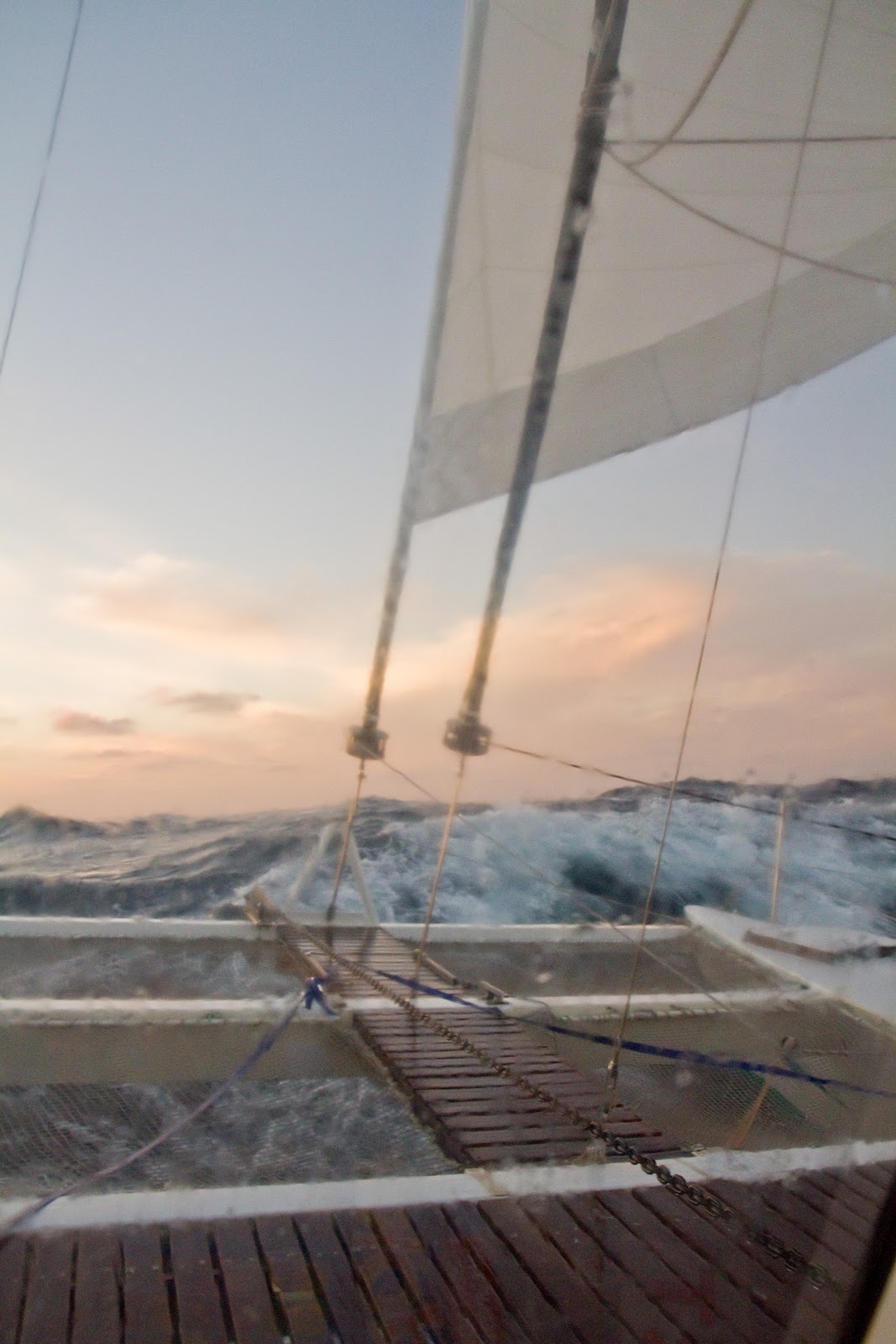
I would love to embrace high winds and towering seas with gusto and awe rather than with shaking knees and white knuckles on the helm. I would love to look at a chart with a long course plotted out for somewhere marvelously foreign and feel nothing but wonder, rather than the more familiar wonder tinged (heavily) with anxiety. I would love to watch Maia as she takes on this world we’re sailing her through and know wholeheartedly that we’re doing the right thing, rather than having the brokenhearted moments of wondering just what she’s losing in this transaction.

Fear is one of the toughest things about cruising for me. I'm fearful of big seas, high winds and crowded seaways. I'm fearful of docking in adverse wind and anchoring in crowded bays. I'm afraid of stuff breaking and equipment failing. I’m afraid of slipping on deck in rough conditions, or of one of us being hurt, or lost overboard. I am afraid that when all is said and done we will regret our choice to cruise. And I worry I am the only sailor who lives this close to the edge of my comfort zone.

Some nights when I wake at 12 midnight and again at 6 am to take over watches I need to go through my mantra, “The night is dark, but I'm not in danger in this moment. The sounds are loud, but nothing is breaking in this moment. The wind is strong, but right now it's propelling us safely.” Some nights when I wake at 3 am worrying that Maia has no permanent base, and that, for children especially, bonding with new people just gets more difficult the more often you say goodbye I need to remind myself that this life is the best gift I know to give my daughter.  

This is a magical life. But there are trade offs. It’s not secure. Not for us. We gave up good jobs in a loving community for the hope we’d find work when we needed it and that we would create a floating village around us. We are aware that our safety is not guaranteed--not on shore, not at sea. We think but don’t know that Maia will blossom better out here.

I read book called Mimff: the story of a boy who was not afraid over and over when I was a child. It was based on an old fairytale about a boy who ran away from his home and family to find fear. I was intrigued, even then, by the idea of being fearless. Mimff traveled the world in search of ‘the fear’ but it wasn’t until he returned home, defeated, and discovered his mother had become very ill while he was gone that he felt afraid.

To me the moral of the story was that you really need to love and value something, or someone, to feel fearful for its security. So I hold that. And when I feel so very afraid, I know it’s because I love this life so very much.

Read more raft-up:
1 Dana svnorthfork.blogspot.com
2 Behan sv-totem.blogspot.com
3 Steph www.sailblogs.com/member/nornabiron
4 Stacey sv-bellavita.blogspot.com
5 Tammy ploddingINparadise.blogspot.com
6 Ean  morejoyeverywhere.com
7 Lynn sailcelebration.blogspot.com
8 Diane www.maiaaboard.blogspot.com
10 Jaye  lifeafloatarchives.blogspot.com
11 Verena pacificsailors.com
12 Toast blog.toastfloats.com

October 1, 2012

What Does a Sailor Need?


Okay—so the title is a bit of a misnomer, it should read what does an Oz based sailor need from Canada? But that seemed wordy. Really we lack for nothing here in Australia. A bit of searching through shops and on the internet and we can find everything we need for the boat. After all, many world-cruisers take off from these shores.

The problem is that often when you find the boat bit you need to pay for it with a wheel barrow of cash. Often the difference in price is just enough to give you a little wallet strain and you suck it up. But in the case of some stuff; weird things like zinc-anodes—the little (heavy!) chunks of sacrificial metal that keep a boat’s underwater metal bits from corroding away, and sailing blocks—the pulleys that allow ropes to run more freely on a boat the price is enough to cause shock.

Happily both are items that are much cheaper in Canada, but it turns out they are also items that when stowed in your carry-on they cause your hand luggage to be searched extensively by airport security. The reason they were in my carry-on is our checked bags were well over weight limit. And no—I hadn’t stocked up on cheap shoes (though I sort of wanted to), I was bringing back paper.

Our list of stuff to bring back was mainly focused on charts (well, we also had replacement parts for the pressure cooker, sanding disks, seals for the canning jars and a few books). But aside from those random items I brought back 75 lbs of paper charts—which actually only added up to charts for a portion of SE Asia and (unexpectedly) a region of the North Sea.

You might wonder why I would pay overweight fees for navigation materials that thanks to chart plotters have essentially gone the way of the dodo, or the sextant. Well, we tend to be late adopters. On our first cruise we only embraced that new-fangled GPS thing when it proved that our sextant using skills were going to take more than one rushed afternoon to perfect. The GPS, it turns out, was a keeper.

But technology often has this way of removing you from the activity you set out to engage in. Chart plotters are easy to use, convenient to have, save money, free up space and save weight (no need for 75 lbs of charts every time you visit a new region) -- but they also take away one more job on a sailboat.

We sail for a combination of the pure joy of it (setting the sails, handling the wheel, choosing a course...) and to get somewhere. And one of the aspects that makes sailing feel like sailing is the navigation. When you navigate with paper charts you're a lot more involved: keeping an eye on landmarks, plotting fixes, comparing what you see against where you are. With a chart plotter I find it easy to be lulled into navigation as video game. I watch my little boat as it bleeps along its onscreen course and completely miss the real landscape.

There’s a danger to navigating on screen. Boats have been known to run aground (to some very tragic outcomes) thanks to human vs chart plotter errors. With electronic navigation there is no necessity to keep a visual track of where you are going the way there is in paper navigating. And when you take human eyeballs out of the equation and stop trying to locate stars, lights, or other landmarks you can make mistakes. 

Tragedy is a rare outcome of electronic navigation though, mostly the drawbacks are the various risks of failure—what’s the back-up plan if your electricity fails and the screen goes blank? And really as a navigation aid (in addition to paper charts) chart plotters can really improve safety aboard.

So I lugged home 85 lbs of charts, fantasizing all the way about ditching them: maybe we should just have two chart plotters. Or maybe a chart plotter, a tablet and e-charts on the computer?

September 23, 2012

Living the Dream--Whales on Moreton Bay


Spring has sprung in Brissie
 We’re really loving life in Brissie—we’re making nice friends, the weather is fantastic, the location is excellent the only real drawback is that while we know creatures live in the murky fast swirling river, mostly they’re bull sharks.

I’m missing blue water. I miss getting up in the morning looking over the side and deciding the only sensible thing to do is jump in for a swim. I miss seeing the graduated shades of blue the very same way my eyes longed for the cool comfort of green when we spent a year in the desert.  Mostly though I miss the creatures; the familiar fish that gather in the shade of our hulls; or the charming short-term residents (a sea lion in Baja that spent a week with us and liked it when Maia blew bubbles on her tummy, the dugong in Vanuatu that were sent to us by magic); predictable visitors (the 8am whale, or afternoon dolphins); and the surprises (giant manta rays, curious reef sharks, shy turtles, a mama humpback and her calf…)

In Brisbane, underwater life has been replaced with cockatoos that play in our rigging, flying foxes that fill the sky at night and kookaburras with hyena laughs that make you join in with a giggle. But I still miss that blue water.
heading down the river
 We should sail the 11 miles down the river to the sea more often—but there always seems to be some fun social event holding us here, or a project that needs our attention. But sometimes we get lucky and social events, projects and seeing the ocean mean the same thing.

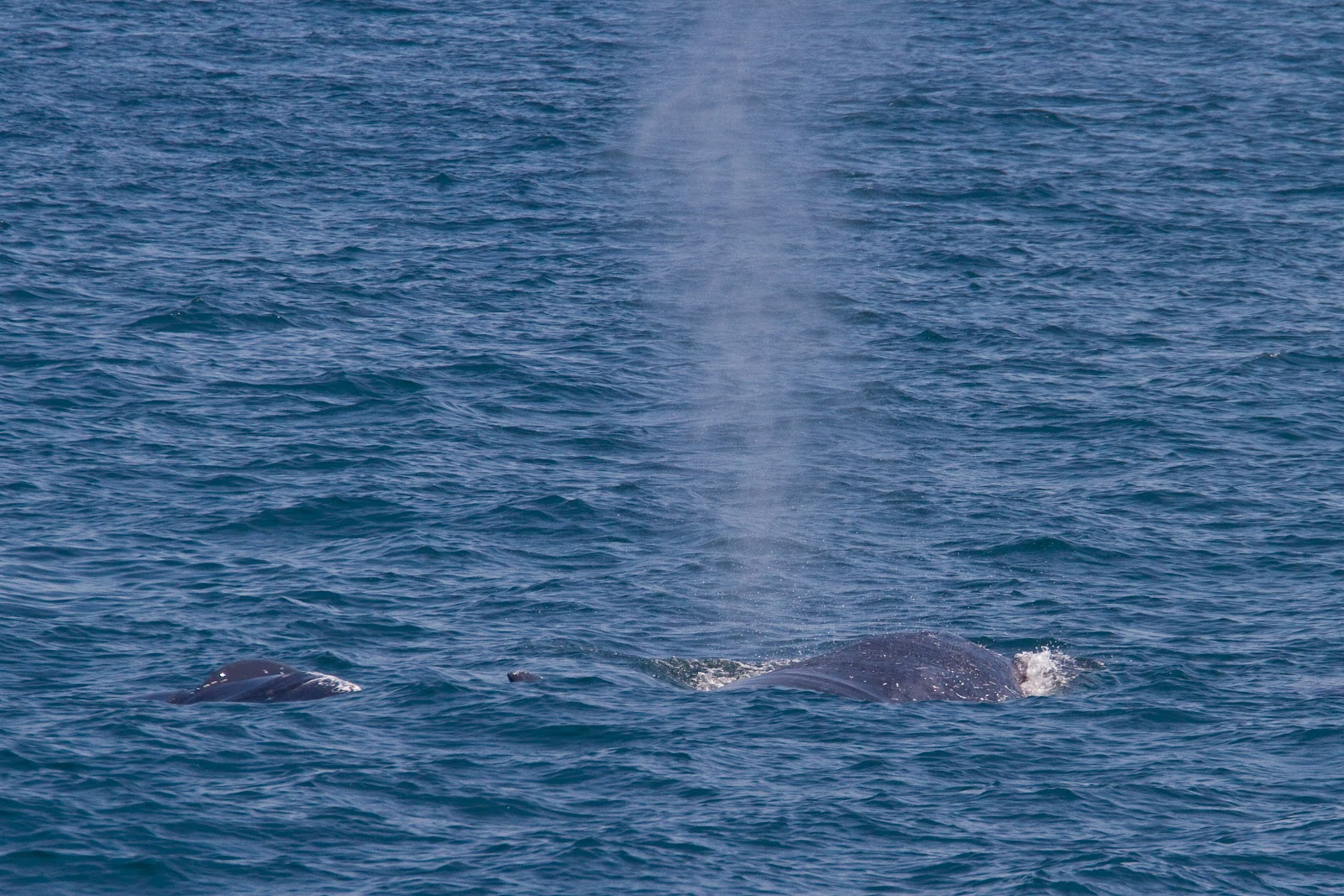
We set off down the river on a boat much bigger than ours. Evan had overseen its refit and the fact the engine stopped twice meant it was still going through a few teething pains. No one seemed to care though, and as we approached the north end of Moreton Bay we started to see whales.


The southern humpbacks migrate 6000km from their feeding grounds in Antarctica to the lagoons in the Great Barrier Reef to mate and give birth. On the return journey, some stop in Moreton Bay for a time. We saw mamas and babies frolicking in the warm clear water. Some of the people onboard had never seen whales before and we felt a little greedy as we tallied not simply the number of times we’d seen whales on our trip so far (this turned out to be far more than we can count) but the number of whale species we’ve seen in the wild (nine for Ev and Maia, ten for me thanks to the Belugas I saw in the St Lawrence).
The day on the bay ended too soon and we were home to our boat by sunset. Maia and I went to the shops to pick up dinner and she told the clerk about our day. “That’s my dream,” the girl told us, “to see a whale in the wild.” As we walked back to the boat, and the kookaburras laughed, Maia commented what a funny feeling it is to get to live another person’s dream, “I’ll have to remember to stay grateful.” She told me.